
Programs
AI and the Developing Child: Finding the Right Balance in Ghana
John Paapa Awotwi
As AI tools become more common in Ghanaian classrooms and homes, a key question emerges: how do we let technology support young learners without letting it replace the experiences that matter most? This piece explores where AI can genuinely help children learn, and why struggle, play, and human connection remain irreplaceable parts of early childhood education. The goal isn't to reject technology, but to keep it in its proper place, one tool among many, so it enhances childhood learning rather than replacing childhood itself.
Artificial Intelligence is beginning to change how children learn. In Ghana, as access to smartphones, tablets, computers and digital learning tools continues to grow, AI is likely to become an increasingly familiar part of education. For parents and teachers, this brings both opportunities and questions. AI can help children practise skills, explore stories and receive learning activities suited to their level. But early childhood education is about more than delivering information. Young children learn through play, conversation, physical activity, exploration and relationships with other people. The challenge is to make sure that technology supports these experiences rather than replacing them.
Where AI Can Help
AI can be useful when it is introduced with a clear purpose. An adaptive learning system, for example, can adjust activities according to a child's performance. A child who understands a concept quickly can move to a more difficult activity, while another child can receive additional practice. AI can also support language and literacy. Interactive stories, vocabulary activities and personalised exercises can give children additional opportunities to practise. For teachers, AI can provide another way to identify learning patterns and areas where a child may need support. These tools can make information about a child's progress easier to identify and discuss. But these benefits depend on how the technology is used.
Children Still Need to Struggle
One of the less obvious risks of AI is that it can make learning too easy. A child who receives an immediate answer every time they face a problem may have fewer opportunities to work through difficulty. Yet making mistakes, trying different approaches and eventually finding an answer are important parts of learning. This is particularly important for young children. They need to develop persistence and confidence, not simply the ability to produce the correct answer. Teachers and parents therefore need to resist the temptation to let technology solve every problem for the child. Sometimes, the best response to a child's question is not an answer from an AI system. It is another question: "What do you think?"
Learning Happens With Other People
A classroom is not simply a place where information is transferred from a teacher to a child. Children learn from one another. They learn to share toys, negotiate rules, deal with disagreements and understand how other people feel. These experiences help children develop social understanding and learn to see situations from another person's point of view. Too much time spent interacting with technology can reduce opportunities for this kind of learning. For Ghanaian schools and families, this is an important consideration. A digital learning activity should not automatically be considered better simply because it is new or uses AI. A group of children building something together, playing a traditional game or exploring their surroundings may be doing just as much important learning as children completing an activity on a tablet.
Put Human Beings in the Loop
AI should support parents and teachers rather than replace them. For example, an AI system might identify that a child is having difficulty with spatial reasoning. The teacher or parent can then turn that information into an activity away from the screen. The child could build with blocks, arrange objects, draw shapes or construct something from locally available materials. In this approach, AI provides information, while the adult decides what that information means and how to respond to it. This human role is particularly important because data about a child does not tell the whole story. A teacher sees the child interacting with classmates. A parent knows the child's interests and personality. These human observations cannot simply be replaced by an algorithm.
Make Time for Play
As schools and homes introduce more technology, they should also protect time for activities that have nothing to do with screens. Children can learn through building with blocks, drawing, painting, playing in sand, exploring nature and creating things from everyday materials. They also need unstructured play. Not every activity needs a lesson objective. Sometimes children should simply be allowed to decide what to play, what to build or what to explore. This helps develop curiosity and self-directed learning. For parents, this can be as simple as giving children time to play outdoors, build something from cardboard boxes or create their own games with friends.
Children Should Learn About AI Too
As children become more familiar with digital technology, they should gradually learn that the systems they use are designed by people and operate according to rules. Even young children can begin developing this kind of thinking through simple questions: · Why did the app show you this? · Who made the rules of the game? · How did the computer decide what to show you? · Could the computer be wrong? These questions encourage children to think about technology rather than simply accept its decisions. Early AI literacy should therefore be about more than teaching children how to use AI. It should also help them understand and question the technology they encounter.
The Technology Should Serve the Child
AI will likely become a normal part of education. The important question is not whether children will encounter it, but how we choose to introduce it. For young children, technology should remain one tool among many. AI can help identify learning needs, provide additional practice and support teachers. But children also need conversation, physical activity, friendships, creativity, mistakes, curiosity and plenty of time to play. The goal should not be to create an algorithmic childhood. It should be to use technology wisely while protecting the human experiences that make childhood such an important period of development.
AI should enhance childhood learning, not replace childhood itself.
Keep reading
This Is Ghana Exhibition 2026
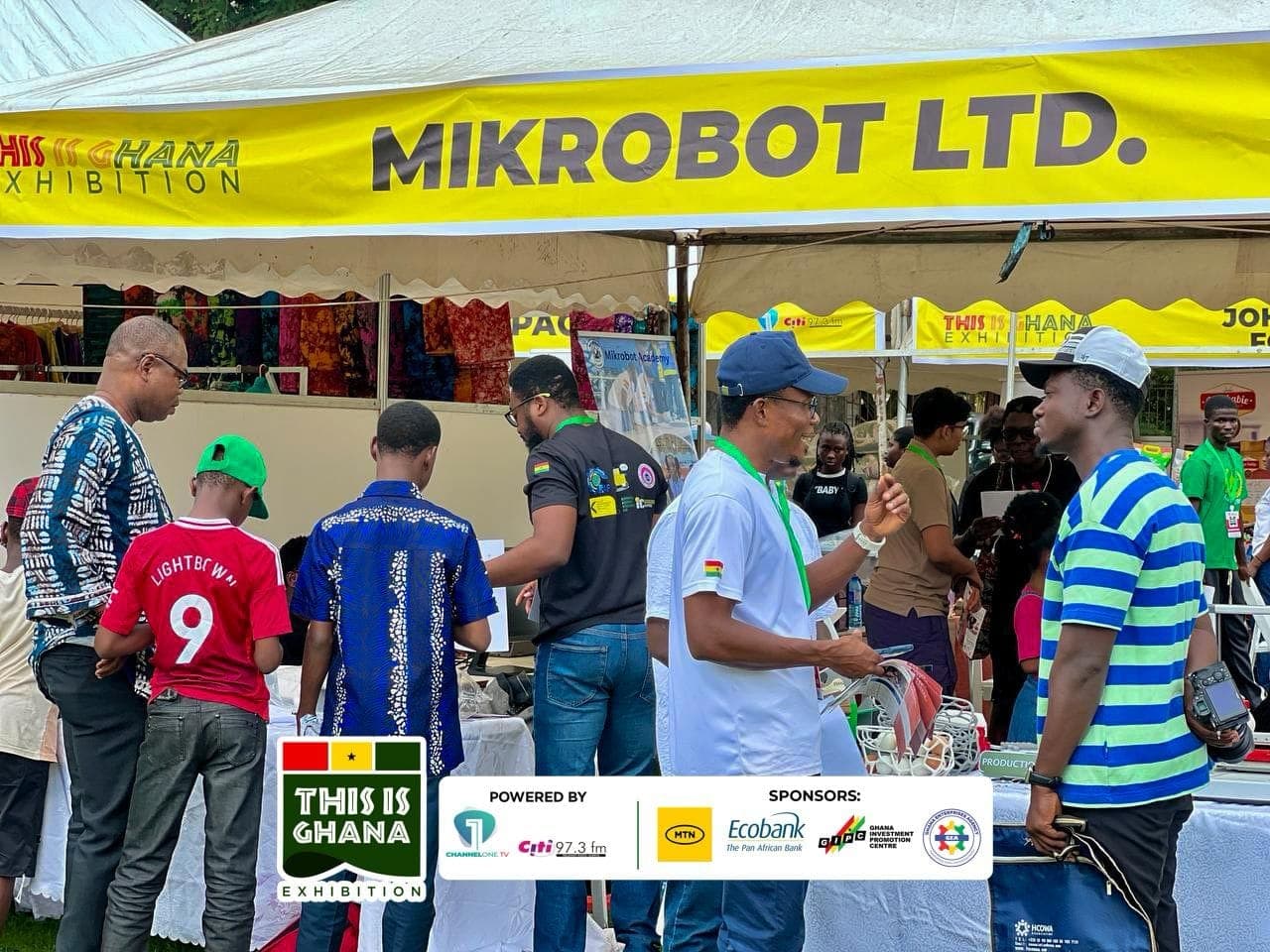
Mikrobot Academy brought STEM to the heart of Efua Sutherland's Children's Park this year, joining This Is Ghana Exhibition to celebrate local innovation and homegrown talent. While kids tinkered and built with LEGOs at our booth, it was the grown-ups who couldn't look away from our NVIDIA Jetson-powered Robot Arm and Cocoa Shade Optimization project. Add in 3D printing demos and creations from our LEGO Mindstorms EV3 and WRO Future Innovators kits, and our booth became a small showcase of what Ghana's next generation of innovators is already building.
Ernest Twumasi · 7 Sep 2026
Team Apex from Mikrobot Academy Crowned 2026 Robofest Junior World Champions
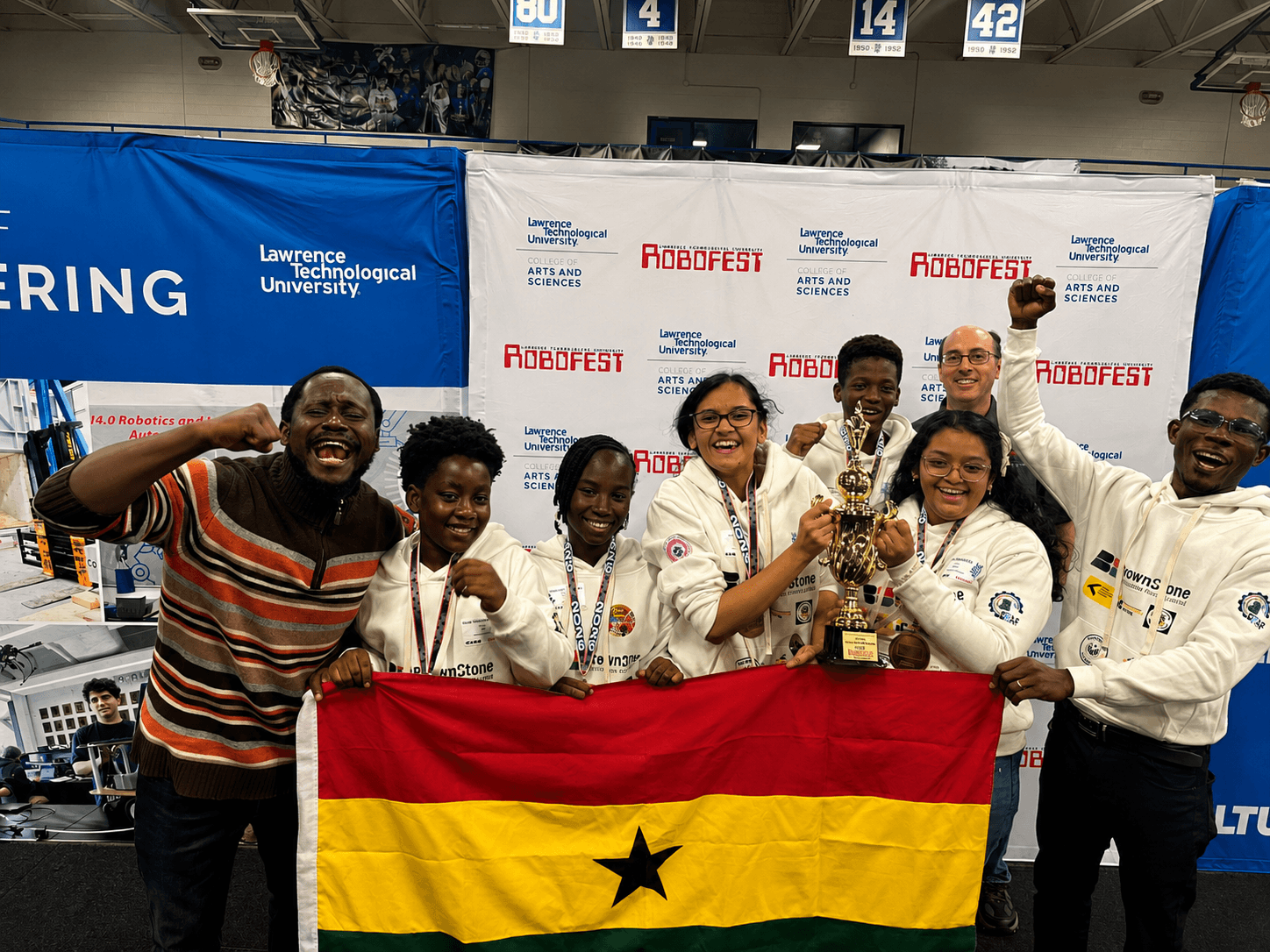
Out of 26 teams from 19 countries, Team Apex from Mikrobot Academy, Ghana has emerged as Champions at the just-ended 2026 Robofest World Championships held in Michigan, USA, outperforming competitors from China, Taiwan, Canada, Mexico, the USA, Hong Kong, Greece, Macau, South Korea and several other countries.
Dr. Michael Wilson · 29 May 2026

From Supporting Solutions to Coaching on the Global Stage: My WRO Singapore 2025 Experience
My journey with Mikrobot Academy during the World Robot Olympiad (WRO) Singapore 2025 was both unique and deeply rewarding.
Oheneba Kwaku Tawiah · 31 Mar 2026